What tools do you need for brow shaping?
Start with a clean spoolie brush to comb hairs upward along their natural growth path. This reveals the natural density, shape, and length of each hair. A pair of slanted tweezers provides the optimal angle against the brow bone for isolating stray hairs outside your desired perimeter. Small, sharp grooming scissors with curved tips help trim excess length safely without pulling the follicle. A brow pencil or powder matching your undertone fills sparse spots, while a clear brow gel sets the shape in place. To protect the skin from irritation or bacterial folliculitis, sanitize all metal tools with 70% isopropyl alcohol before and after each grooming session.
How do you find your ideal brow shape?
A reliable approach to shaping is the three-point mapping method, which aligns the brows with your underlying facial anatomy:
- The Start: Hold a pencil vertically against the outer edge of your nostril running straight up to the brow bone. Where the line crosses marks where your brow should naturally begin.
- The Arch: Pivot the pencil from the nostril across the outer edge of the pupil or iris. The intersection indicates the natural highest point of your arch.
- The Tail: Angle the pencil from the nostril to the outer corner of your eye. Where it extends past the eye marks where the tail should taper off.
Lightly mark these reference points with a soft eyeliner pencil to visualize your boundary before tweezing. Brows are naturally asymmetrical (often described as sisters rather than identical twins), so prioritize harmonious balance with your bone structure rather than forcing strict geometric symmetry, which frequently leads to over-plucking.
How should you trim excess brow hair?
Trimming removes unruly length without thinning the overall brow line. Begin by brushing the brow hairs straight upward with your spoolie. Identify only the tips that extend visibly beyond your mapped upper outline. Using small scissors held parallel to the brow line, snip only the excess tips one hair at a time; never cut straight across or near the base. Next, brush the hairs downward to inspect the lower edge for any long strays. Work in small increments and step back from the mirror regularly in natural lighting to assess balance before making additional cuts.
How should you tweeze stray hairs safely?
Tweezing is ideal for defining the perimeter, but caution protects the hair follicle from permanent damage. Always tweeze in the direction of hair growth, gripping each stray near its root to prevent hair shaft breakage. Restrict tweezing to stray hairs that sit outside your mapped shape, particularly along the bridge of the nose and below the arch. Avoid plucking hairs from the top border of the brow unless they are clearly isolated strays, as the upper border establishes the arch height. If your skin is sensitive, grooming right after a warm shower helps soften follicles and reduce discomfort.
What is the best way to fill sparse areas?
When filling in brows, matching your undertone creates a much more natural appearance than simply choosing a dark or light shade: cool brows pair best with ashy or taupe tones, while warm brows benefit from soft chestnut or caramel pigments. Using an ultra-fine brow pencil, draw light, feathery strokes that mimic individual hairs in sparse patches, concentrating lightly on the tail. For broader thinning, a soft brow powder applied with a firm angled brush builds subtle dimension without harsh edges. For detailed guidance on gentle blending, see our guide on shaping and filling sparse eyebrows naturally. Always finish by combing through with a clean spoolie to soften any concentrated pigment.
How often should you maintain your brows?
Eyebrow hair growth rates vary significantly depending on genetics, age, and past grooming habits. In general, hair in the brow region grows at a modest rate of approximately 0.14 to 0.16 mm per day, meaning noticeable regrowth often emerges within one to three weeks. Rather than adhering to a rigid timetable, perform gentle maintenance every week or two by removing only obvious stray hairs outside your mapped baseline. Full trimming sessions are best spaced out and done only when hair length extends beyond your natural perimeter, giving periorbital skin adequate time to settle between grooming sessions.
Are there any safety tips for brow products and grooming?
Because brow grooming occurs directly adjacent to the delicate periorbital area, following evidence-based safety practices is essential:
- Avoid At-Home Eyebrow Tinting or Dyes: The U.S. Food and Drug Administration (FDA) explicitly advises consumers against dyeing or tinting eyebrows at home Using Cosmetics Safely. Permanent hair dyes and unapproved tinting formulations used near the ocular area carry severe risks of chemical burns, severe eye irritation, and potential vision impairment. Color additives approved for brow and lash tinting, such as silver nitrate gel, are strictly restricted by regulation to professional salon application and are not authorized for retail consumer distribution.
- Use Products Formulated for the Eye Area: The FDA emphasizes that cosmetics applied near the eyes must be specifically labeled for ocular safety. Never substitute lip liners, body glitters, or craft pigments for brow or eye makeup.
- Perform a Tolerance Patch Test: If you have reactive skin or a history of allergic contact dermatitis, test a small amount of any new cosmetic on a less conspicuous area (such as behind the ear or on the inner arm) and monitor for 24 to 48 hours for redness, swelling, or itching before applying it near the eyes.
- Practice Tool and Brush Hygiene: The American Academy of Dermatology highlights the importance of cleaning cosmetic tools regularly to reduce microbial buildup and skin irritation. For step-by-step cleaning recommendations, see our guide on how to clean makeup brushes properly.
- Caution with Waxing: Facial waxing pulls on delicate periorbital skin and can cause epidermal stripping, particularly if you are using topical retinoids, alpha-hydroxy acids, or prescription acne medications that increase skin fragility. In such cases, gentle tweezing is generally preferable.
Recommended Makeup Tools
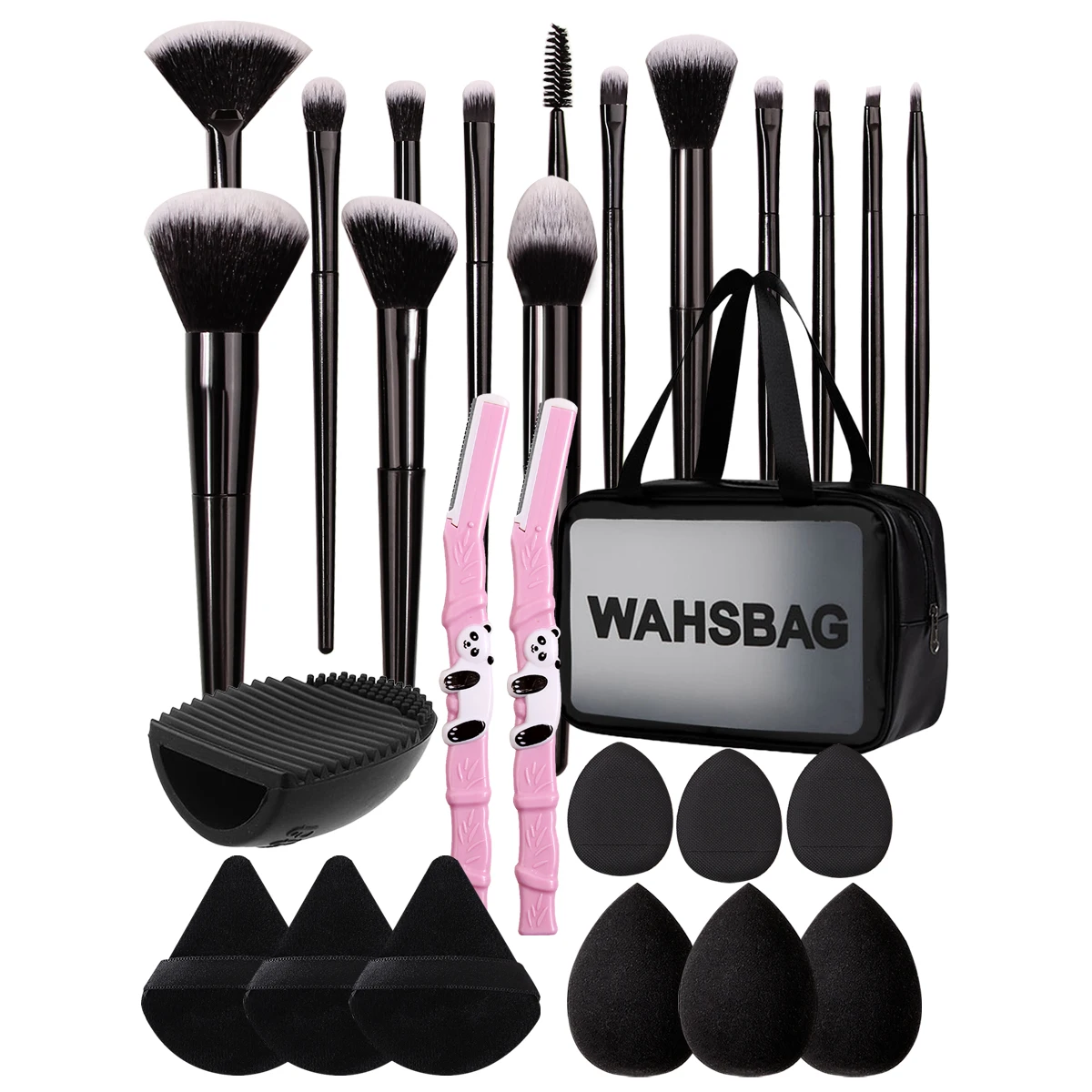

Recommended Brow Grooming Tools: What to Look For
Having the right tools makes precise grooming easier while minimizing skin irritation. When selecting brow essentials, look for:
- Slant-Tip Stainless Steel Tweezers: A 25-degree angled tip provides optimal alignment against the brow bone, allowing you to grip individual hairs at the base without pinching the skin.
- Dual-Ended Spoolie & Angled Brush: Stiff nylon bristles comb through stubborn hairs and diffuse pencil strokes, while an ultra-thin angled synthetic brush provides precision for powder application.
- Curved Grooming Scissors: Professional curved blades prevent pointed tips from poking delicate skin while trimming over-length hairs.
- Clear Conditioning Brow Gel: A lightweight, flake-free polymer gel sets hairs in place throughout the day without depositing unnatural color.
Browse brow grooming tools on Amazon
Slanted tweezers, grooming scissors, spoolies and setting gels, as an Amazon category search. We have not tested individual brands.
What to Remember
- Map start, arch, and tail points using anatomical facial landmarks before tweezing.
- Trim only the excess tips extending past your baseline; never cut near the hair base.
- Always pluck in the direction of hair growth to minimize shaft breakage and follicle trauma.
- Fill sparse areas with light, hair-like strokes that match your natural undertone.
- Maintain brows with gentle touch-ups as regrowth appears rather than adhering to rigid schedules.
- Follow eye-area safety: avoid at-home brow dyes, sanitize tools with 70% alcohol, and patch test new formulas.
Further Reading from Health Authorities
- U.S. FDA -- Using Cosmetics Safely
- American Academy of Dermatology -- How to Clean Your Makeup Brushes
How this article was made
Researched and drafted with AI assistance, then screened by automated checks for originality, exaggerated claims and structure before publishing. No clinician reviewed it, and it is general information rather than medical advice. Read more at About us, or write to us if you spot an error.
Advertising disclosure: the links below are affiliate links. We may earn a commission if you use them, at no extra cost to you. This does not change the article's content, and it is not a medical recommendation.
Browse makeup essentials on Amazon
Mineral foundations, brushes and makeup primers, as an Amazon category search. We have not tested individual products.